

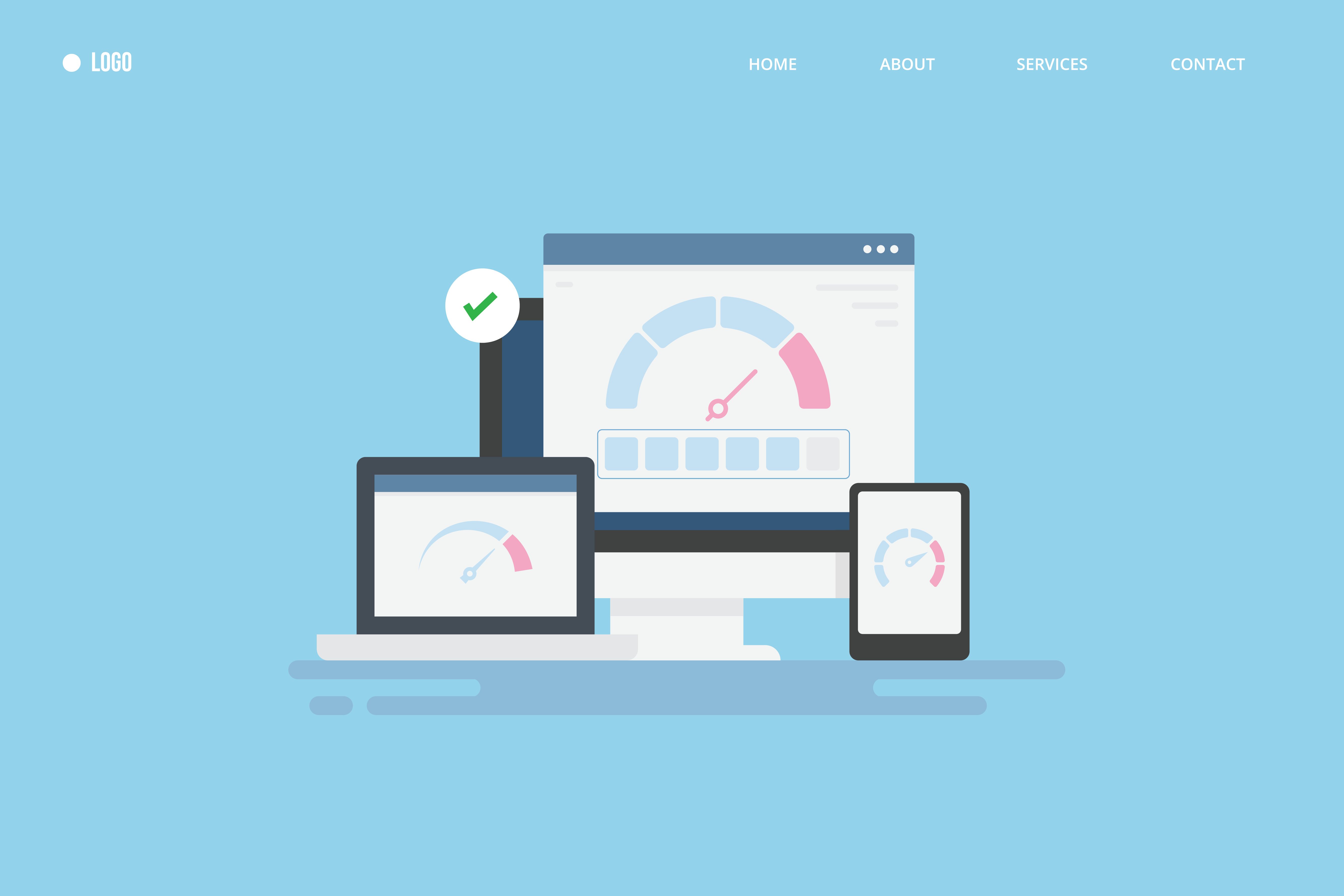
Not only can landing on a slow-loading page be frustrating, but it also gives the viewer more opportunity to click back and view another site instead. For these reasons and many others, the speed of your site plays a vitally important part in user experience and, ultimately, your search ranking.
A site that loads quickly is far more likely to encourage users to stay and explore the content. The longer a user views your site, the more Google recognises it as relevant information, which can then raise you through the search rankings.
What factors influence the speed of a site?
- Performance: a combination of user experience, loading time and navigation.
- Server Performance: a measure of your server’s ability to complete its tasks. This measure includes metrics such as CPU usage, throughput and uptime.
- Relevancy: customer experience can vary depending on how difficult it is to understand and how relevant your site’s content is – the more relevant, the better the reading experience.
- Connection and Compatibility: is the site responsive and compatible with all types of internet? (Cable, wireless, DSL, satellite and cellular)
- User’s Internet Service: the speed of a site can be influenced by the consumer’s connection which varies by provider and location.
How fast should my website be?
Most research shows that more than 50% of mobile users will leave a site if it takes more than 3 seconds to load, with most expecting a page to be completely visible within 2 seconds. Therefore, it is best to aim for a site speed of between 1 and 2 seconds on both mobile and desktop versions.
How do you improve site speed?
- Image Size: lowering the resolution to reduce the amount of data that needs to load or making the images responsive so they can adapt to the screen size can help site speed significantly.
- Defer Off-Screen Images: this means that off-screen elements are only loaded when the above content is fully loaded.
- Reduce CSS and Javascript: removing any unnecessary data not processed by the browser is a great way to improve site speed.
- Text Compression: third-party plugins can help reduce the size of the text files on your site.
- Avoid Redirects: combining redirects from HTTP to HTTPS and WWW to non-WWW and using a responsive design to avoid redirecting users to a mobile version of your site.
- Preloads: preloading key actions and files you know users will want to see will help the site appear quicker.
- Changes to Animated Content: converting GIFs to videos, using MPEG4/Web for animations and PNG/WebP for static images will help site speed too.
- Compress Images: ensuring images are compressed – to a level of 85 or lower will have a positive effect on the site’s speed.
The speed of your site can be the tipping factor between a good and bad user experience. Aside from drawing in potential customers, loading speed also impacts how the site ranks for relevant keywords. Providing a site that loads quickly and gives customers a stress-free experience allows the search engine to see that people want to see your site.
With so many ways to easily improve the speed of your site, it is one of the best ways to help your online presence. Need help speeding up your site? The experts at Essex Interactive are here to help; for more information about the services we provide, get in touch with our team today!